
Spelling to Communicate
At Spell to Connect, S2C is more than a method: it is our foundation.
Through S2C, we equip spellers and their families with tools that unlock authentic expression, dignity, and belonging.
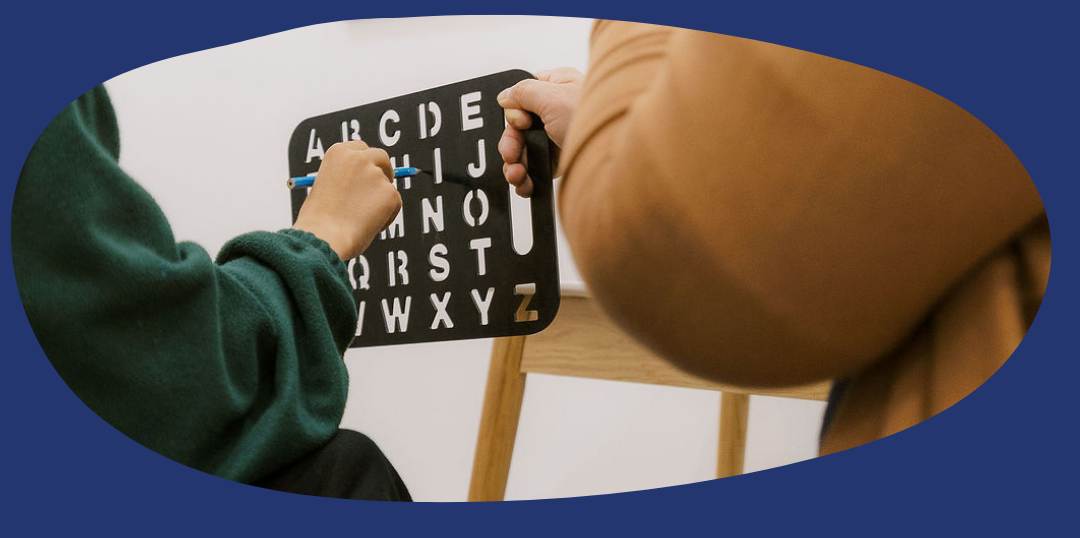

What is Spelling to Communicate (S2C)?
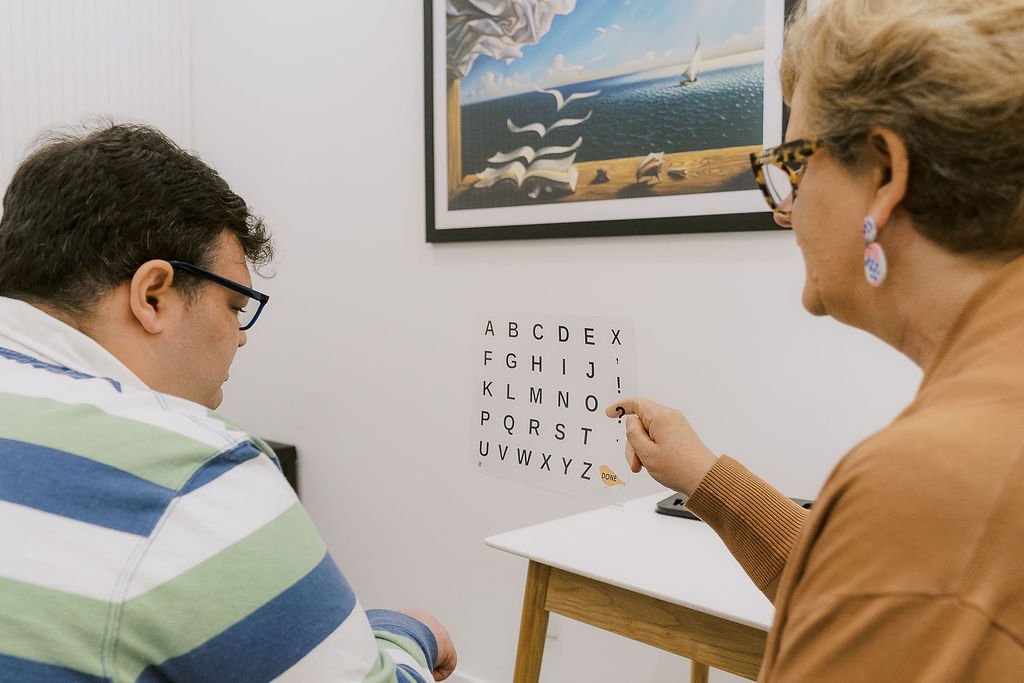
Spelling to Communicate (S2C) is a motor-sensory, neuro-affirming method that teaches individuals with motor planning challenges how to point to letters to spell their thoughts. By shifting focus from speech production to purposeful gross motor skills, S2C provides a reliable way to access language and unlock communication.
As spellers gain accuracy, they progress from letterboards to typing on keyboards.
Through consistent practice, students gain the ability to share their ideas, feelings, and knowledge — giving them independence, dignity, and a true voice.
Why it Matters
Even when words exist, they may not tell the whole story. Some individuals may have some speech, but not in a way that allows them to reliably communicate their full thoughts, feelings, and needs. S2C bridges this gap by offering a dependable, consistent way to access language, ensuring every person — regardless of how much they can speak — has reliable access to their full voice.
Who can benefit from S2C?
S2C is for adults and children, and is designed for a full spectrum of speech abilities:
Minimal speech
A person who may be able to use some speech to produce a number of words or phrases, but do not have enough speech for robust and flexible communication.
Unreliable speech
A person who may have the ability to speak, but is not always able to access their speech intentionally or communicatively.
Little or no speech
A person who may or may not be able to produce a small number of words and struggle to communicate using speech.
The Research
-
S2C is grounded in peer-reviewed research on motor-sensory learning, communication, and apraxia. Studies support its effectiveness in helping nonspeaking, minimally speaking and unreliably speaking individuals access and express their intelligence.
-
“An inability to speak has often been equated with an inability to think. Such presumptions of incompetence are based on assumptions that uncritically privilege speech as a preferred mode of communication and expected means through which competence is demonstrated.”
“Professionals have an ethical obligation to seek methods for communicating with people with ASD that will access their intelligence and free their voices.”
“Autistic children learn to read through an inverted, non-communicative, pathway.”
“Hyperlexia, or a hyperlexic-like profile, characterises a substantial portion of the autistic spectrum, in which the subcomponents of the typical reading architecture are altered and dissociated. Autistic children follow a chronologically inverted path when learning to read, and make extended use of the perceptual expertise system, specifically the visual word form recognition systems.”
-
Over 180 peer-reviewed articles have been written which support the use of S2C and other AAC teaching methodologies used to teach someone how to spell and type independently.
These articles can be found here.
Stories on Screen

Speller Stories