
Connect With Us
General Enquiries
Whether you’re a parent, carer, educator, practitioner, or simply curious to learn more about Spell to Connect, our team is here to help.
If you have any questions about how we can support you, please reach out using the form.
Enquiring about S2C sessions?
Fill out the form on our S2C Sessions page
FAQs about S2C Sessions
-
A session involves an age-appropriate topic. The lesson is broken down into chunks where the practitioner reads a chunk and then the student spells. The practitioner works with each student where they are at teaching the motor skills, and building tolerance for sitting or focusing on the letterboards, for learning how to spell to communicate. Some other purposeful motor movements may be incorporated in sessions to work on other skills and break up the session if students need breaks from spelling.
-
50 minutes (10 mins for Q&A)
-
In S2C we presume competence. An S2C lesson provides the right mix of systems and supports based on latest neurological research and results. S2C lessons are delivered by highly trained S2C practitioners, and utilise a motor-cognitive see-saw approach to develop the skills required for successful communication.
-
Elizabeth Vosseller says “every nonspeaking person deserves a champion.” In S2C our policy is that we never turn any nonspeaker away. Communication is a fundamental human need and right. Nonspeakers have nothing to prove to “earn” our belief and commitment.
-
Yes. We work with each individual where they are at. If we recognise that we don’t have the skills to work on certain skills that need to be addressed to help an individual to access our service, we will advise that we don’t have theses skills, and when applicable we might be able to provide a recommendation.
-
Nonspeakers have a condition called apraxia* (also known as dyspraxia). This makes it very hard for them to perform purposeful motor movements and learn new motor skills. The motor involved in speech is a highly complex process of fine motor skills. Pointing to a letterboard as used in S2C is a less complex process for nonspeakers to learn because it is a gross motor skill (rather than fine motor). In S2C we teach the gross motor movements involved in pointing to stencil boards. We start with 3 stencil boards breaking down the alphabet across the boards. This allows a student to develop the ocular motor and gross motor skills with a lighter cognitive load. As motor skills improve through practice, spellers progress to a full letterboard, and then some develops the skills to type with a communication regulation partner, and some may progress to independent typing.
-
This depends on many factors including the level of apraxia*, the skill of the Communication Regulation Partner (S2C Practitioner) and others supporting the person to spell, engagement with the lessons, how much practice is undertaken, the environment, health of the speller, and other factors.
-
$175.00
-
We are not a registered NDIS provider. However, if the service is working towards NDIS plan goals, NDIS may fund the cost of sessions.
-
We encourage you to do a lot of research. You can start with the International Association for Spelling as Communication website (I-ASC).
-
Click here to find your nearest S2C practitioner in Australasia and New Zealand.
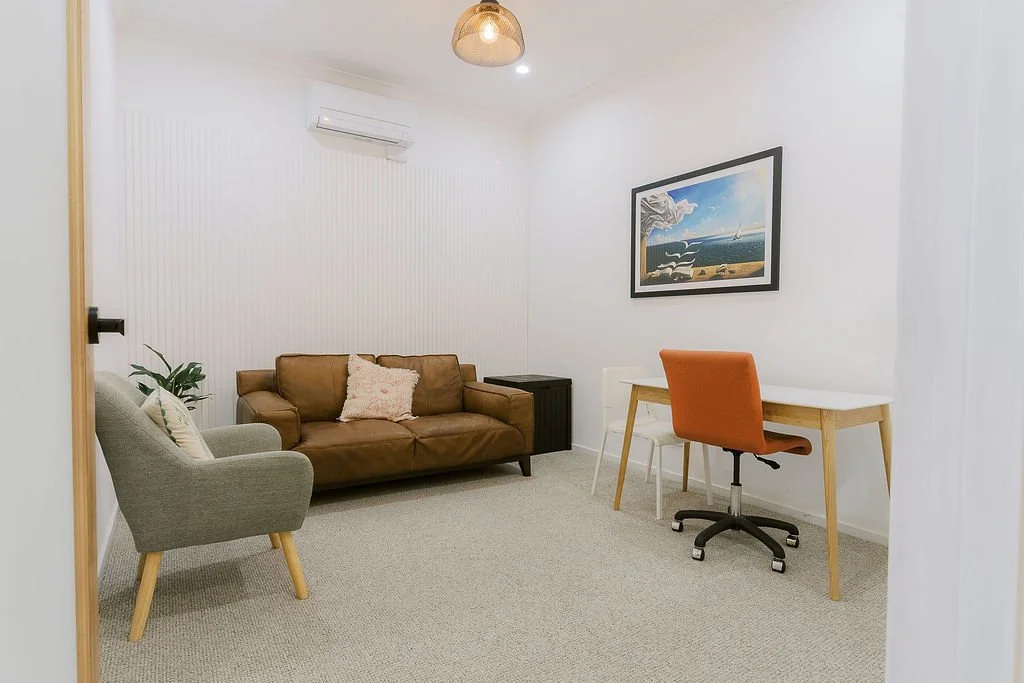
Our Clinic
Visit Us
11 McKeon Rd
Mitcham, VIC 3132
Hours
Tuesday 8am - 7pm
Wednesday 9am - 8pm
Thursday 10am – 7pm
Friday 8am - 2pm
Phone
0483 745 521
Learn more about our clinic